
Fabric Upholstery Guide for Sofas and Chairs
- Home
- The Karlsson Guide
- Fabric Upholstery Guide.....
Start With Use, Not Fabric
Before looking at swatches, define the environment:
- High-use family living rooms → durability and cleanability matter more than softness
- Formal living / drawing rooms → aesthetics can take priority
- Home theatre seating → low reflectivity, breathability, and tactile comfort
- Commercial / rental spaces → abrasion resistance and stain protection are non-negotiable
Most wrong choices happen because people select fabric first and application later.
Fabric Categories (What You’re Actually Buying)
Natural Fabrics
Cotton
- Breathable, comfortable, widely available
- Prone to wrinkling and staining
- Best for low to moderate use
Linen
- Premium, textured, relaxed look
- Creases easily, absorbs spills quickly
- Suitable for formal or low-traffic areas
Wool
- Naturally resilient and flame-resistant
- Warm feel, less common in India due to climate
- Works in premium or niche applications
Synthetic Fabrics
Polyester
- The industry workhorse
- Durable, colourfast, resistant to wrinkling
- Often blended to improve performance
Nylon
- Extremely strong, high abrasion resistance
- Rarely used alone; typically blended
Acrylic
- Wool-like appearance
- Resistant to fading and mildew
Olefin (Polypropylene)
- High stain resistance
- Good for casual and outdoor-like environments
- Limited softness compared to premium fabrics
Blended Fabrics
Most quality upholstery fabrics are blends—this is deliberate.
- Cotton/polyester blends balance comfort and durability
- Linen blends reduce wrinkling while retaining texture
- High-performance blends are engineered for stain resistance and longevity
A pure fabric is rarely the best choice for real-world use.
Weave Types
The weave determines how the fabric wears over time.
Plain Weave
- Tight, durable, low texture
- Easy to maintain
- Ideal for high-use seating
Twill Weave
- Diagonal pattern (like denim)
- Better drape, hides wear well
Velvet / Pile
- Soft, luxurious surface
- Shows pressure marks and shading
- Best for statement pieces, not rough use
Jacquard
- Intricate woven patterns
- Durable if tightly constructed
- Adds visual depth without printing
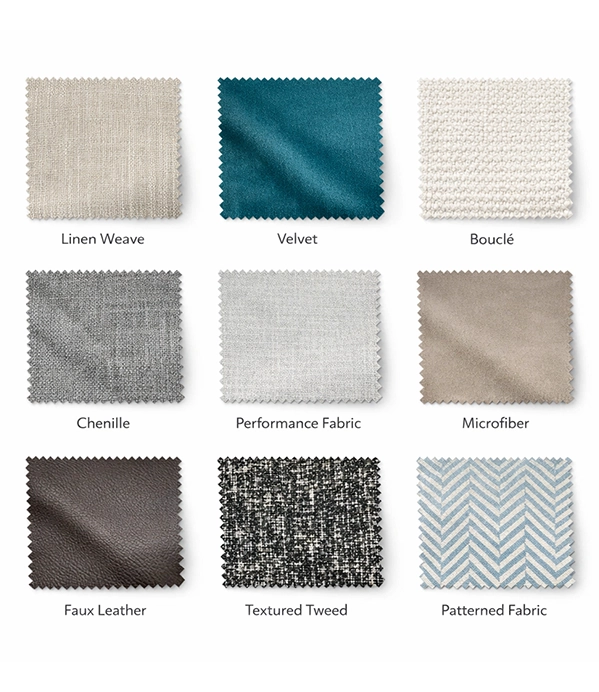
Chenille
- Soft, slightly raised texture
- Comfortable but can flatten with heavy use
Performance Metrics (Ignore This at Your Own Risk)
Martindale / Rub Count
- 15,000–20,000 → light residential
- 20,000–30,000 → standard residential
- 30,000+ → heavy residential / commercial
Anything below 20,000 is not suitable for daily-use sofas.
GSM (Grams per Square Meter)
- Indicates fabric weight, not necessarily durability
- Heavier fabrics often feel more premium but must be paired with strong weave
Colour Fastness
- Resistance to fading from light and cleaning
- Critical for bright rooms and sun exposure
Pilling Resistance
- Low-quality fabrics develop surface fuzz quickly
- Look for tested anti-pilling ratings
Stain Resistance: Reality vs Marketing
There are two approaches:
Topical Treatments
- Applied after weaving
- Wear off over time
- Common in mid-market fabrics
Solution-Dyed / Performance Fabrics
- Colour and resistance built into the fibre
- Far more durable long-term
- Preferred for serious usage
No fabric is "stain-proof or pet proof." The claim is usually exaggerated.
Choosing Fabric by Application
Family Sofa (Daily Use)
- Polyester or high-performance blend
- Tight weave
- 25,000+ rub count
- Medium to dark tones or textured patterns
Luxury Formal Sofa
- Linen blends, velvet, or jacquard
- Focus on aesthetics
- Accept higher maintenance
Recliners / Home Theatre Seating
- Low-sheen fabrics (avoid glare)
- Breathable materials
- Tight weave to avoid stretching
- Avoid overly delicate textures
Accent Chairs
- Opportunity to use bold textures or colours
- Lower risk due to limited use
Colour and Texture Strategy
- Light colours look premium but show dirt quickly
- Dark solids show lint and dust
- Mid-tones and textured weaves hide wear best
- Patterns disguise stains and ageing effectively
A practical choice is rarely a flat, light solid.
Maintenance Reality
- Vacuum regularly to prevent fibre breakdown
- Rotate cushions to distribute wear
- Clean spills immediately—delay causes permanent damage
- Avoid harsh chemical cleaners unless fabric is rated for it
Even the best fabric fails with poor maintenance.
Common Mistakes
- Choosing fabric based only on showroom appearance
- Ignoring rub count and performance specs
- Selecting delicate fabrics for high-use areas
- Overvaluing "softness" at the cost of durability
- Believing "stain-proof" claims without understanding treatment type
Final Recommendation
For most buyers, the correct choice is:
- A high-quality blended fabric
- With 30,000+ rub count
- In a tight weave with subtle texture
- From a reputable mill with tested performance data
Everything else is a compromise between aesthetics and longevity.