
Home Theatre Seating Layout Guide
(Luxury Cinema Seating Design)
Designing a home theatre is not about filling a room with chairs. It is about sightlines, comfort geometry, acoustics, and movement efficiency working together.
- Home
- The Karlsson Guide
- Home Theatre Seating.....
A poorly planned layout will feel cramped, obstruct views, and waste expensive space. A well-designed layout delivers cinema-grade immersion at home.
This guide covers how to plan seating layouts correctly - based on real-world installation experience.
Start With Room Dimensions
Everything is dictated by the room—not the seating.
1. Key parameters
- Room length (critical for number of rows)
- Room width (determines seats per row)
- Ceiling height (affects risers and sightlines)
2. Rule of thumb
- Minimum room length for 2 rows: 16–18 ft
- Comfortable 3-row layout: 20–24 ft
- Premium spacing: 26 ft+
If the room is smaller, forcing extra rows is a mistake. Reduce rows, not comfort.
Viewing Distance (Non-Negotiable)
The first row must align with screen size.
Standard guideline
- Distance = 1.2x to 1.6x screen width
Example
- 120" screen → ideal distance: 10–12 ft
Too close = neck strain
Too far = loss of immersion
Row Planning Strategy
Single Row (Compact Luxury)
- Best for small rooms or apartments
- Focus on maximum comfort and spacing
Typical layout
- 3-4 seats
- Large armrests (6-10 inches)
- Recliners or incliners
Two Rows (Most Popular)
- Ideal balance of capacity and comfort
- Requires proper riser for second row
Layout
- Front row: primary viewing
- Back row: elevated by 8-12 inches
Spacing between rows
- 6–7 ft minimum (recliners)
- 5–6 ft (incliners)
Three Rows (Dedicated Theatre Rooms)
- Only for larger rooms
- Requires precise planning
Structure
- Row 1: primary viewing
- Row 2: optimal balance
- Row 3: social / overflow
Riser heights
- Row 2: 10–12 inches
- Row 3: 20–24 inches
Anything less → blocked sightlines
Sightline Engineering (Where Most Go Wrong)
Each viewer must see the bottom of the screen clearly over the row in front.
Key factors
- Eye height when seated
- Seat back height
- Screen height from floor
- Riser height
If not calculated properly
- Back rows become unusable
- Expensive seating loses value
Recliners vs Incliners (Critical Decision)
Recliners
- Back tilts + footrest opens outward
- Requires more depth
- Better for standalone seating
Incliners (Recommended for Theatres)
- Seat slides forward as it reclines
- Saves 8–12 inches per row
- Allows tighter layouts without compromise
For multi-row theatres, incliners are the correct engineering choice.
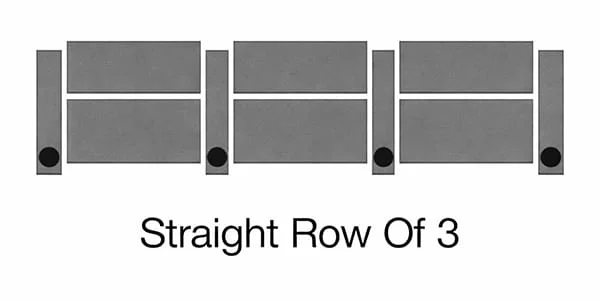
Seat Width & Arm Planning
Typical dimensions
- Seat width: 21–24 inches
- Arm width: 5–8 inches
Example
- 3-seat row with shared arms
- Total width: ~78–90 inches
Wider arms
- More premium feel
- Integrated cupholders, controls, storage
Walkways & Access
Access is often ignored until installation—then it becomes a problem.
Recommended
- Side aisle: 24–30 inches
- Rear walkway: 30–36 inches
Avoid
- Climbing over seats
- Tight entry points
- Dead-end layouts
Spacing Between Rows
This depends entirely on mechanism
Seating Type Minimum Row Spacing
- Recliners: 6-7 ft
- Incliners: 5-6 ft
Motorised headrests reduce the need for excessive recline angle.
Premium Layout Enhancements
For high-end projects
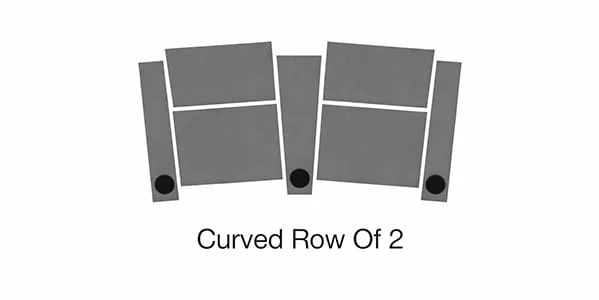
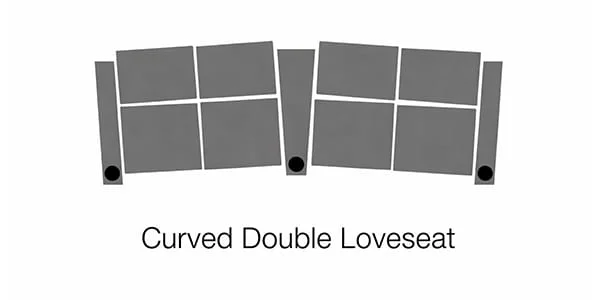
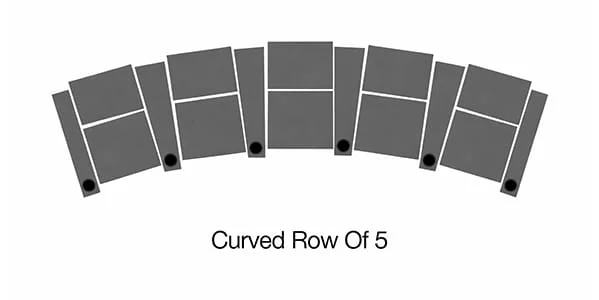
- Curved seating rows (better viewing angles)
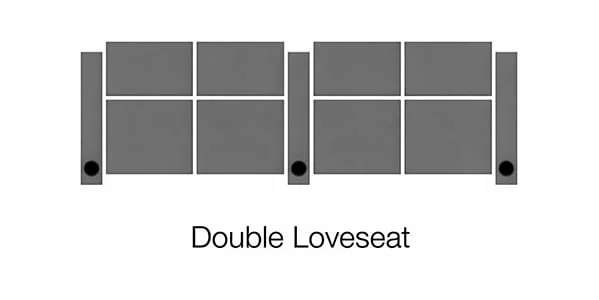
- Love seats or chaise modules
- Integrated lighting in risers
- Acoustic panel alignment with seating grid
- Dedicated center "sweet spot" seats
Common Layout Mistakes
- Forcing too many seats into the room
- Ignoring recline clearance
- Incorrect riser heights
- Poor screen-to-seat proportion
- No walkway planning
- Using standard sofas instead of theatre seating
These mistakes are expensive to fix after installation.
Recommended Layout Examples
Layout A – Compact (12 x 16 ft)
- 1 row
- 3 seats
- Incliners
Layout B – Mid Size (14 x 20 ft)
- 2 rows
- 3 + 3 seats
- Rear riser: 10 inches
Layout C – Large Theatre (16 x 26 ft)
- 3 rows
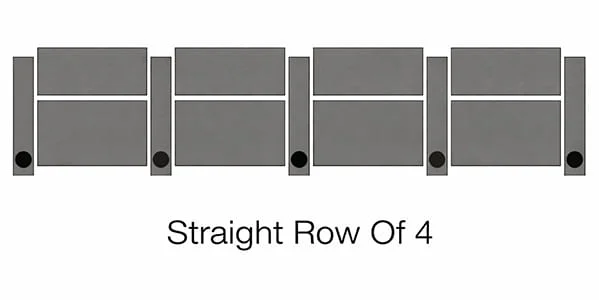
- 4 + 4 + 4 seats
- Tiered risers
Customisation Matters
Every theatre should be tailored
- Seat firmness preference
- Leather or fabric selection
- Motorisation level (single, dual, triple motor)
- Headrest angles
- Arm design and finishes
There is no "standard" layout in a serious home theatre.
Karlsson Seating designs bespoke home theatre seating layouts based on your room, screen, and usage.
We do not sell pre-set configurations.
We design around how you want to experience the space.