
How to Choose the Right Sofa and Configuration for Your Space
- Home
- The Karlsson Guide
- How to Choose the Right Sofa.....
Start With the Room, Not the Sofa
Before looking at styles or materials, define:
- Room size (usable, not just overall)
- Entry and exit paths
- Focal point (TV, view, or conversation)
- Number of regular users
A sofa should support the room's function—not dominate it.
Understand Your Usage Pattern
This determines configuration more than aesthetics.
Formal Living Room
- Used occasionally
- Prioritise symmetry and visual balance
- Comfort matters, but durability is secondary
Family / Daily Living Room
- High usage
- Needs deeper seating, durable materials
- Layout should allow relaxed, informal use
Compact Urban Space
- Space is constrained
- Every inch matters
- Multi-functional layouts become critical
Media / TV Room
- Seating should face a clear focal point
- Deeper seats and reclined posture preferred
Choose the Right Configuration
This is where most decisions go wrong.
Straight Sofa (3-Seater / 4-Seater)
Best for:
- Smaller rooms
- Clean, minimal layouts
- Pairing with chairs
Advantages:
- Flexible placement
- Easy circulation
Limitation:
- Limited seating capacity per footprint
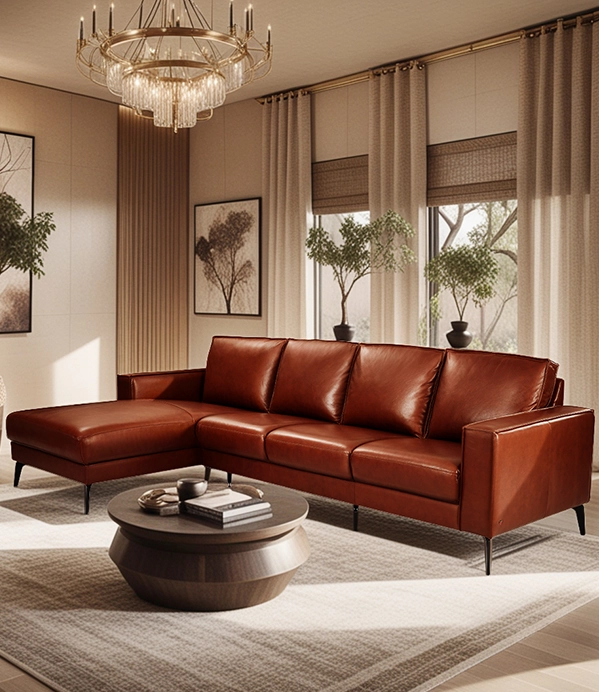
L-Shape / Sectional Sofa
Best for:
- Corner utilisation
- Family seating
- TV-oriented layouts
Advantages:
- Maximises seating
- Creates a defined zone within the room
Critical Decision:
- Left-facing vs right-facing (must match room layout)
Common Mistake:
- Buying a sectional without mapping circulation—blocking movement paths.
U-Shape Sofa
Best for:
- Large rooms
- Conversation-focused layouts
- Home theatres or lounge spaces
Advantages:
- High seating capacity
- Strong visual presence
Limitation:
- Requires proper scale—will overwhelm smaller rooms
Modular Sofa Systems
Best for:
- Evolving spaces
- Large or irregular layouts
Advantages:
- Can be reconfigured over time
- Scales with the room
Reality:
- Only works if the modules are properly engineered-otherwise it feels like disconnected pieces.
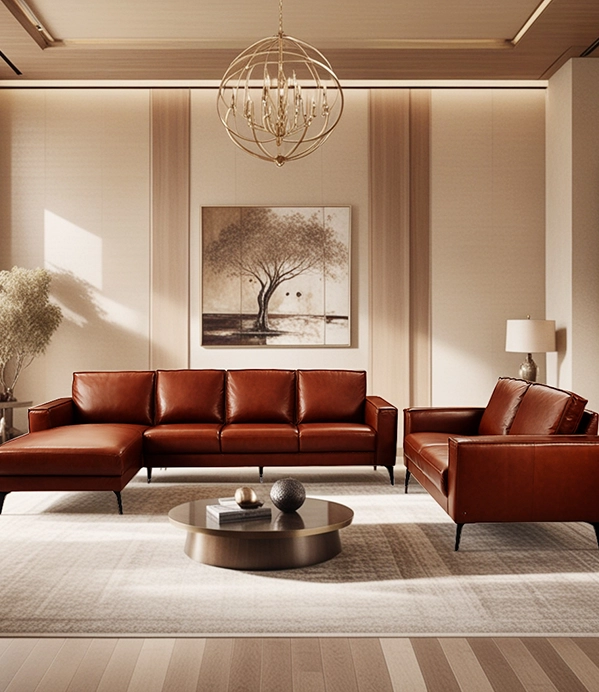
Sofa + Accent Chairs
Best for:
- Balanced, flexible layouts
- Formal and semi-formal spaces
Advantages:
- Better visual composition
- Easier to adapt over time
Get the Size Right (This is Non-Negotiable)
Key Dimensions to Check
- Overall length: Must leave breathing space on both ends
- Seat depth:
20–22 inches → upright seating
22–26 inches → relaxed lounging - Seat height: Typically 16–18 inches
- Back height: Affects posture and visual bulk
Circulation Rules
- Maintain 30–36 inches walkway clearance
- Avoid blocking doorways or natural paths
- Ensure easy movement around the sofa
A sofa that looks good but disrupts movement will feel wrong immediately.
Plan Around the Focal Point
Every seating layout should answer one question: What are people facing?
TV-Centric Rooms
- Direct or slightly angled alignment
- Avoid excessive distance or awkward angles
Conversation Spaces
- Opposing seating (sofa + chairs or U-shape)
- Keep distances comfortable—not too far apart
Mixed Use
- Combine both—sectional + movable chairs
Proportion and Scale
This is where premium spaces are separated from average ones.
- A large room with a small sofa looks under-furnished
- A small room with an oversized sectional feels cramped
- Arm thickness, back height, and leg design all affect perceived scale
Rule: The sofa should occupy the space confidently, not aggressively.
Open vs Closed Base
A subtle but important choice.
Open Base (Visible Legs)
- Feels lighter
- Works in smaller spaces
Closed Base (Floor-touching)
- Feels solid and grounded
- Works in larger, more formal settings
Practical Considerations Most People Ignore
- Entry access: Will it fit through doors, lifts, staircases?
- Custom sizing: Off-the-shelf rarely fits perfectly in Indian homes
- Future flexibility: Will the layout still work if the room evolves?
Common Mistakes
- Choosing based only on showroom appearance
- Ignoring circulation and movement paths
- Buying oversized sectionals for small rooms
- Not accounting for seat depth and comfort preference
- Fixating on design before solving layout
Final Approach
A correct decision follows this order:
- Define room function
- Map circulation and focal points
- Select configuration
- Finalise dimensions and proportions
- Then choose design, fabric, and finish
Reverse this order, and you will compromise either usability or aesthetics.
The Bottom Line
A sofa is not just furniture—it is the anchor of the room.
The right configuration will make the space work effortlessly.
The wrong one will keep reminding you of the mistake every day.